
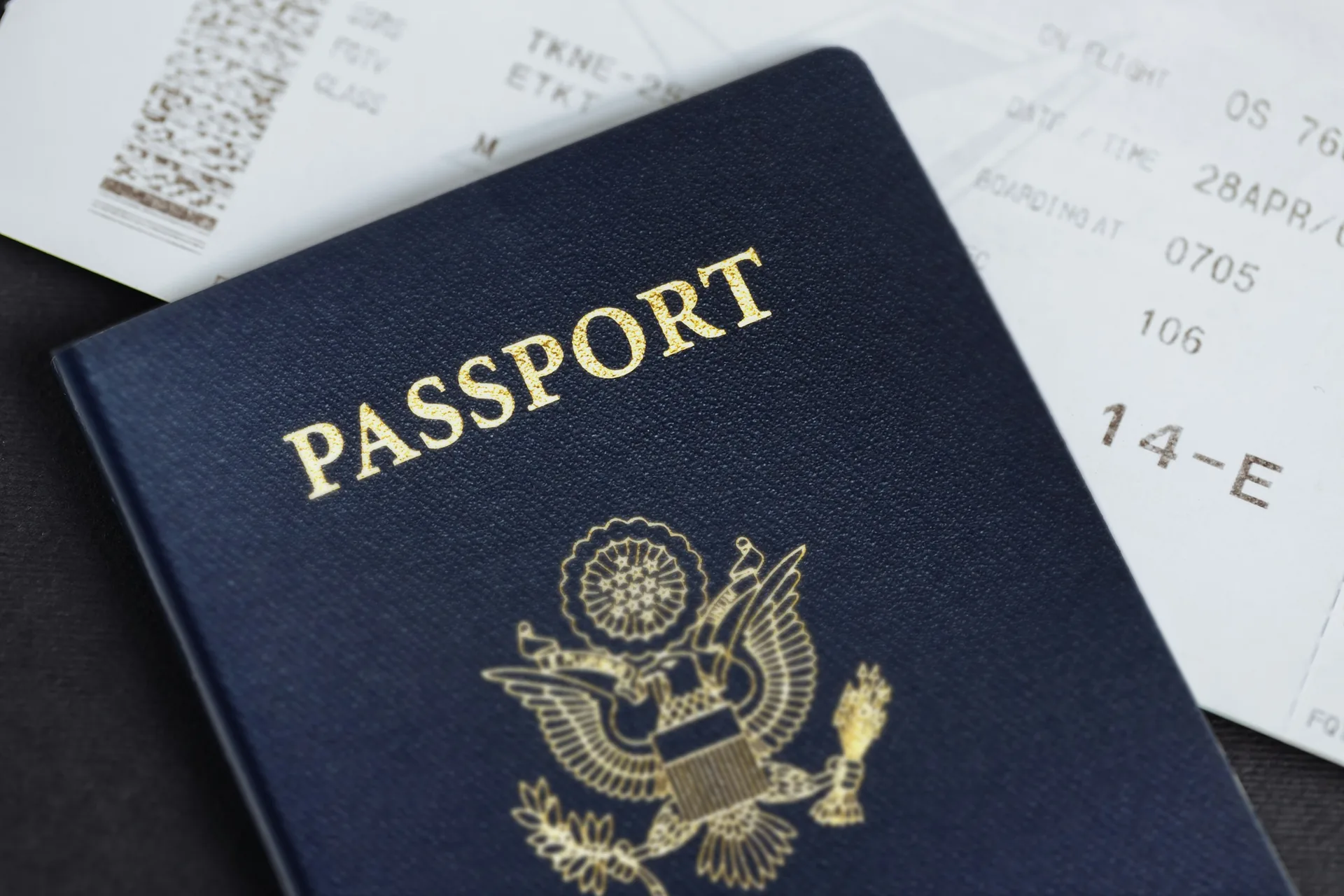
Before a Friday flight, check the physical ID each adult will hand to TSA, not just the boarding passes on your phone. Since REAL ID enforcement began, a standard state license alone is not enough. A passport or another accepted document can work instead. Children under 18 generally need no ID for domestic TSA screening, but the airline may have its own rule.
That distinction matters most on a three- or four-day getaway. An ID problem at security can consume the afternoon you planned to spend at the hotel or with family. My rule is simple: settle every adult's checkpoint document when you book, confirm the children's airline requirements, and check the documents again before leaving home. This guide covers flights within the United States; an international trip has different document requirements.
Start with the adult's actual checkpoint document
TSA's current acceptable-ID list, checked October 2, 2026, requires travelers 18 and older to present acceptable identification at the checkpoint. A REAL ID compliant state license or ID works. So does a state-issued enhanced license or ID, a U.S. passport, or a U.S. passport card. The full TSA list includes other documents, such as certain trusted traveler, military, and permanent resident cards. If you are relying on one of those, check the exact name on TSA's list rather than assuming any government card will do.
A standard state license that is not REAL ID compliant no longer qualifies by itself. Look for your state's compliance marking, and use your state motor vehicle agency to resolve an uncertain card. TSA says a temporary driver's license is not acceptable. If your replacement REAL ID has not arrived, take an accepted alternative you already hold. A U.S. passport book may feel excessive for a domestic weekend, but it is a practical backup when the license is still pending.
For a Saturday-to-Tuesday city break, I would put each adult's chosen document next to the bag the night before departure and verify it is physically there again before the car leaves. A picture of the license in a phone album is not the same as presenting the document. Keep the boarding pass accessible too, but treat it as a separate check.

For children, separate the TSA rule from the airline rule
TSA does not require identification from children under 18 traveling within the United States. That includes a school-age child on a family weekend flight. You do not need to rush to obtain a REAL ID for a 12-year-old just because the adults need acceptable ID. The important exception is an unaccompanied minor who is eligible for TSA PreCheck: TSA says that child needs acceptable ID to receive expedited screening.
The airline can have its own requirements for a traveler under 18, especially a child flying alone or a young child whose age affects the reservation. Check that airline's child and unaccompanied-minor policy before departure. For a family flying to see relatives, I would do this once while booking and save the answer with the trip details. Do not assume TSA's no-ID rule answers the airline's check-in question.
Check names and documents before the travel day
- At booking: Enter each traveler's name carefully and compare the adult reservation with the document they plan to use. If something is wrong, ask the airline about a correction while there is time. TSA accepts some suffix variations, but that is no reason to leave a material mismatch unresolved.
- A week out: Check the TSA acceptable-ID list again before travel, and verify any airline document rule for a child. If an adult's license is standard or the new card has not arrived, choose an accepted alternative now.
- The night before and before the return: Put the physical ID in one secure, reachable place. Check it after hotel checkout as well as before the outbound flight. A return checkpoint asks the same identification question, and a document left in the hotel safe can turn a relaxed final morning into a scramble.
If you carry a passport as your alternative or backup, an ordinary secure pocket is enough. A dedicated holder can help when you also need to keep an ID card and boarding material together; see a passport and ID holder only if your current setup makes documents easy to misplace. The holder does not make an otherwise unacceptable ID acceptable.
At the checkpoint, take out the chosen document before reaching the officer, then return it to the same pocket. Do the same after checking out of the hotel for the flight home. A repeatable place matters more than any accessory.
Keep the accepted document within reach
After deciding which physical ID each adult will use, choose one secure place for it on both travel days. If a passport is the backup and your current pocket system is unreliable, a cover with ID card slots is one optional way to keep the documents together.
If an adult arrives without acceptable ID, allow for a real delay
Do not count on a friendly explanation or a photo of your license. Under TSA ConfirmID, an adult without acceptable ID may pay a $45 fee for an identity-verification attempt covering a 10-day travel period. The federal payment page, checked October 2, 2026, says the process is optional and does not guarantee TSA can verify the traveler. Each adult without acceptable ID must complete it separately; a paid receipt must be shown at the checkpoint for travel during that period.
If you discover the problem at home, first look for an accepted physical alternative. If none exists and you still plan to travel, read the current TSA instructions, pay through the official federal page if you choose ConfirmID, and leave substantially more time at the airport. Verification and additional screening can take time, and an unverified traveler cannot enter the checkpoint. A short trip with a tight flight is exactly when that uncertainty hurts most.
Skip the paperwork that does not solve this problem
Do not bring a stack of documents for a child because you think TSA requires a REAL ID from everyone in the family. For a domestic flight, TSA's under-18 rule is different. Bring anything the airline specifically requires for the child's situation, then keep the rest of the family paperwork at home. Likewise, a temporary license, a boarding pass, and a phone photo are not substitutes for an adult's acceptable checkpoint ID.
There is no need to buy a special wallet to fly. The useful habit is knowing which adult document qualifies and being able to produce it on both legs of the trip. If you can do that, the family can spend its first afternoon on the getaway rather than at the edge of the security line.
Images: U.S. passport and boarding pass by Global Residence Index, source; Denver International Airport security checkpoint by Scott Fillmer, source. Both used under the Unsplash License.
This article contains affiliate links. If you buy through them, The Trip Deck may earn a commission at no extra cost to you. See our Affiliate Disclosure Policy.

