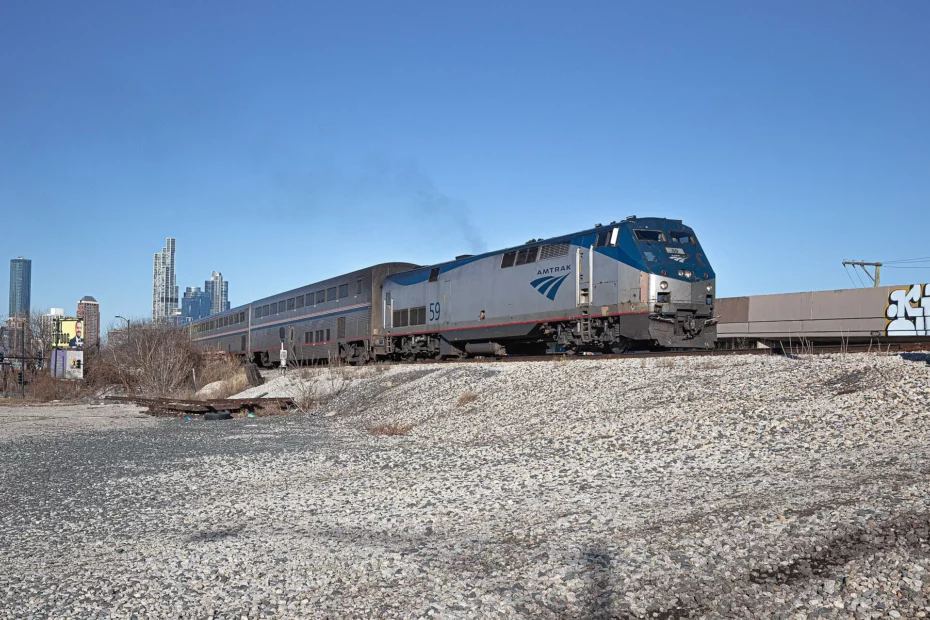
A Milwaukee weekend by train works because the hard parts line up unusually well. Chicago Union Station and Milwaukee Intermodal Station both sit close to the places a short-trip traveler is likely to use, the ride is short enough to fit around work, and downtown Milwaukee is compact enough that a car can spend the weekend feeling unnecessary.
The Hiawatha does not make every version of the trip easy. You still need to reach Union Station, show up with a sensible buffer, choose a hotel that keeps the station and your plans within reach, and reserve a return train that protects Sunday. If your itinerary stretches into the suburbs or your group can fill a car, driving may be cheaper and more flexible.
For one or two nights centered on the Historic Third Ward, downtown, the riverfront, a museum, a game, or a long dinner, though, rail is the cleanest version of this getaway.
The weekend math is better than the mileage suggests
The current Amtrak timetable, dated October 22, 2026, shows the weekend 8:25 a.m. train leaving Chicago Union Station and reaching downtown Milwaukee at 10:04 a.m. On Saturday and Sunday, the evening return leaves Milwaukee at 7:35 p.m. and reaches Chicago at 9:04 p.m. That gives a one-night traveler most of two usable days without an early Sunday checkout becoming the end of the trip.
A two-night version is even easier. Leave Chicago at 5:08 p.m. on Friday and the timetable places you in Milwaukee at 6:55 p.m., early enough for dinner after dropping a bag. Come back on the 7:35 p.m. Sunday departure, and the trip provides two full days plus a first evening. The timetable also lists a Friday-only late departure from Chicago, but its after-midnight Milwaukee arrival makes it a poor default for most travelers.
Those are planning examples, not promises. Some times and running days differ between weekdays and weekends, and the same timetable shows several travel times rather than one universal 89-minute ride. Search your exact date on Amtrak, check for service notices, and leave the first reservation in Milwaukee a little loose.
A practical sample weekend
One night: Chicago Saturday at 8:25 a.m., Milwaukee at 10:04 a.m.; Milwaukee Sunday at 7:35 p.m., Chicago at 9:04 p.m.
Two nights: Chicago Friday at 5:08 p.m., Milwaukee at 6:55 p.m.; return Sunday evening.
Recheck both trains for your dates before committing to a hotel, event, or timed admission.
The real travel time starts at your front door
The train itself is not the whole comparison. A Chicago traveler who can reach Union Station on one direct Metra, CTA, bus, or short rideshare has a very different trip from someone crossing the city in Friday traffic. Add your home-to-station leg, a boarding buffer, the rail ride, and the Milwaukee station-to-hotel leg before deciding that the timetable is faster than driving.
At the north end, book Milwaukee Intermodal Station (MKE), not Milwaukee Airport Rail Station (MKA), when downtown is your destination. The Intermodal Station is on West St. Paul Avenue, at the edge of the Third Ward and close to the western side of downtown. That location is what makes the car-free version work. A hotel several miles away can turn a neat station-to-station trip into a series of extra rides.
Pack for the final blocks as well as the train. A small roller or weekender is easier on sidewalks than a large suitcase, particularly in rain, snow, or construction. If the walk is not comfortable for everyone in the group, price a short ride from the station before choosing the hotel rather than hoping the distance will feel smaller on arrival.

Milwaukee gives the train a useful last mile
Once you are in Milwaukee, walking can carry a surprising amount of the weekend. Visit Milwaukee describes downtown as compact and notes that the Milwaukee RiverWalk runs through the center toward the Historic Third Ward. That gives you a natural framework for an arrival day: leave the bag, find lunch at or near the Public Market, then follow the neighborhood and river rather than immediately solving another transportation problem.
The free Hop streetcar can help with selected downtown trips. Its M-Line serves Intermodal Station and the Historic Third Ward, while the L-Line connects downtown and the Third Ward with lakefront destinations. Routes, hours, and headways vary by line, and service notices can change the plan. Check The Hop's current hours and schedule and live service alerts before planning around a museum ticket or your return train.
MCTS buses extend the map when you want a neighborhood beyond the streetcar and walking core. That is where the car-free plan needs judgment. A direct bus to one priority can be easy; stacking several distant stops into the same day recreates the very logistics the train helped you avoid.
Build the itinerary around two compact halves
For a one-night trip, resist the urge to cover every Milwaukee headline. Use Saturday for the Third Ward, Public Market, downtown riverfront, and an evening plan. That evening might be a show, a game, a brewery visit, or simply dinner without a clock hanging over it. The point is to let the neighborhood earn the train choice.
Give Sunday one anchor. The Milwaukee Art Museum and lakefront pair naturally with the streetcar and a walk when the weather cooperates. If motorcycles are the real interest, make the Harley-Davidson Museum the anchor instead and keep the rest of the day nearby. In either case, leave a generous buffer before the 7:35 p.m. train so dinner, weather, a bus, or a longer museum visit does not turn the station trip into a sprint.
With two nights, Friday becomes the pressure-release valve. Arrive, check in, and have dinner. Saturday can hold the major museum or event, while Sunday stays open for the market, riverfront, and whatever looked worth returning to. The extra night improves the getaway less by adding attractions than by removing the need to make every meal and admission fit one narrow sequence.
Choose the hotel for the trip you will repeat
A room near the Intermodal Station is useful on arrival and departure. A room closer to the lakefront, Third Ward, or your event is useful every time you leave it. The right answer depends on which walk repeats.
Westown properties near the station can minimize luggage time and work well for events around the convention center or Fiserv Forum. The Third Ward is the better fit if the market, restaurants, and riverfront are the heart of the weekend. Farther east, a downtown or lakefront location can make a museum-focused Sunday easier. None of those labels is precise enough on its own, so map the actual hotel entrance to the station, your evening plan, and your Sunday anchor.
When you compare Milwaukee hotel locations and full stay totals, keep the dates, occupancy, room type, and cancellation terms the same. A slightly higher room total may be the better weekend value if it removes two rides and lets you store a bag near the return train.
The train saves decisions, but it does not always save money
Do not compare two rail tickets only with gasoline. A fair driving total includes fuel, tolls where applicable, hotel parking, parking at attractions, and the time spent entering and leaving two city centers. A fair train total includes every ticket, the trip to Union Station, and any Milwaukee rides that the hotel location creates.
For one traveler or a couple staying downtown, the train often makes sense before it wins a strict price contest. Nobody has to drive, the return time is defined, and parking disappears from the weekend. For a family or group of four, one car can become the lower-cost choice quickly, especially when parking is included at the hotel. The train may still win if nobody wants to drive or if construction and traffic make the road trip unattractive, but it should win honestly.
Fares vary with demand and advance purchase, so use a current round-trip search rather than carrying an old published fare into the budget. Compare the total only after both directions are selected. The inexpensive outbound is not useful if the preferred Sunday train is much higher or unavailable.
Compare the stay after choosing the trains
Lock in the arrival and return windows you can actually use, then compare hotels by exact location and full stay total.
Who should take the Hiawatha?
Take the train if Union Station is reasonably easy to reach, you are staying downtown or in the Third Ward, and one or two central attractions are enough. It is especially good for a solo traveler, a couple, or friends who would rather talk, read, or rest than negotiate I-94 and downtown parking.
Consider driving if the group fills a car, your Chicago starting point makes Union Station a trip by itself, your hotel includes parking, or the Milwaukee plan spreads into several neighborhoods and suburbs. A car is also more forgiving when your return time needs to stay open.
Do not force either choice. A good train itinerary begins with the actual trains. A good driving itinerary begins with parking and the route at the time you expect to travel. Price both from door to door and give your limited weekend hours a value, even if that value never appears on a receipt.
The bottom line
The Hiawatha is an easy weekend escape when you let it do what it does best: connect the centers of Chicago and Milwaukee while your plans stay compact. A Saturday morning departure and Sunday evening return preserve most of two days, and a Friday evening start turns the trip into a relaxed two-night break without using a vacation day.
The best version is not ambitious. Pick a central hotel, one main attraction, one neighborhood to linger in, and a return train with breathing room. Then Milwaukee feels close in the way that matters for a short getaway, not just close on a map.
Sources: Amtrak Hiawatha timetable dated October 22, 2026, Amtrak Hiawatha route information, Visit Milwaukee transportation guide, and The Hop's current schedule and service alerts. Timetables, fares, service, hotel availability, and operating hours can change.
Images are AI-generated editorial illustrations; they do not document exact track alignments, station architecture, transit operations, skyline relationships, or individual travelers.
This article contains affiliate links. If you book through them, The Trip Deck may earn a commission at no extra cost to you. See our Affiliate Disclosure Policy.