
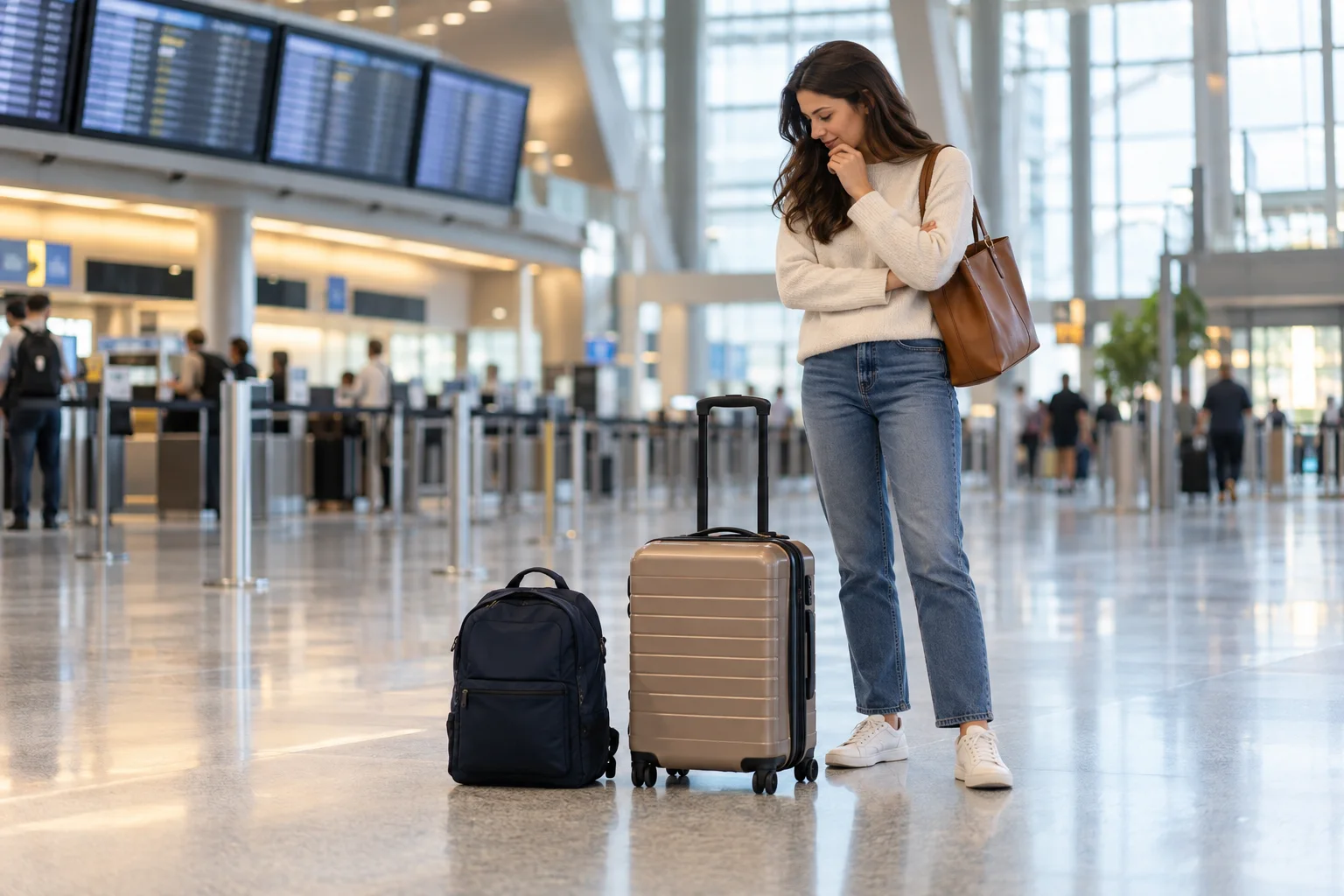
Basic economy is easy to love at first glance. You are planning a Friday-to-Monday escape, the cheapest fare is sitting right there, and saving money on the flight means more room in the budget once you arrive. Sometimes it really is the smart choice. The trick is making sure you can live inside the fare's rules without paying to undo them later.
Think of it the way a well-traveled friend would explain it: ignore the label for a minute and picture the trip you are actually taking. What bag will you bring? Do you care where you sit? How certain are those dates? Once those answers are honest, the better fare usually becomes pretty obvious.
The $100 question
In a recent same-flight comparison for a domestic long weekend, regular Economy was about $100 more round trip than Basic Economy for one adult. That sounds like a meaningful gap, especially for a short trip. The basic fare would get the traveler to the same destination, after all.
But the two tickets were not really selling the same trip. The basic fare allowed a personal item, charged for an advance seat choice, boarded later, and offered the tighter change terms. Regular Economy included a full-size carry-on and standard seat selection, with more forgiving rules if the itinerary had to change.
Then came the part that changed the calculation: adding a round-trip checked bag to the basic fare cost roughly the same as moving up to Economy. Anyone who needed more than an under-seat bag could spend about the same total either way. At that point, Economy was not the fancy option. It was simply the package that included more useful things for the money.
If you want to try the same comparison with current fares, compare current Chicago-to-New York flights, choose one exact itinerary, and open the details for each fare. The numbers will change, but the method holds up.
Start with the bag, because it usually gives away the answer
Before you get too attached to the lowest fare, pull out the bag you expect to take. A soft backpack or tote that fits under the seat can preserve nearly all of the Basic Economy savings. A rolling suitcase usually changes the conversation.
United currently warns that a full-size carry-on is not included with many of its U.S. Basic Economy fares. Other airlines may include one even with their most restrictive ticket, which is why the words “basic economy” are not enough. You have to open the fare details and see what that particular airline is offering on that particular trip.
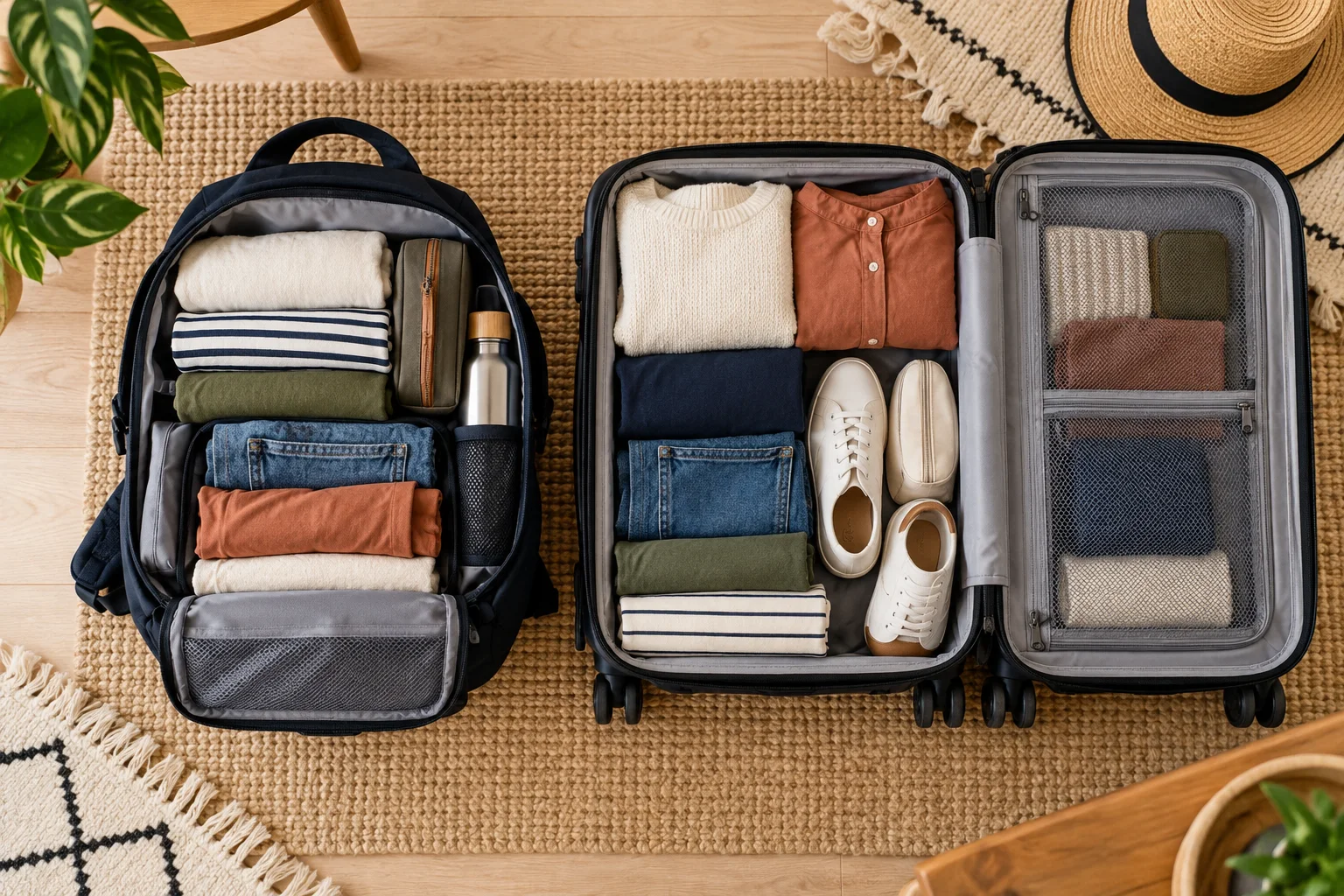
Pack before you price, even if it is only a quick test on the bed. If everything fits comfortably in an under-seat bag, Basic Economy still has a strong case. If the plan depends on forcing a roller into the personal-item category, it is better to know that at home than at the gate.
Traveling with someone else adds one more wrinkle. Two people sharing one checked bag should split that cost across both tickets. Two people bringing a roller each need to price the bag per traveler. That small difference can swing the decision.
Decide whether a seat is a preference or part of the trip
If you are flying solo and truly do not care whether you land in a middle seat, give seat selection a value of zero and keep going. There is no reason to pay for a benefit you will not use.
The answer changes for a couple hoping to sit together, a parent traveling with a child, or anyone who needs an aisle or window for comfort. United currently allows Basic Economy travelers to buy a seat assignment before check-in, but the price depends on the flight and the seat. Regular Economy in the sample included standard seat selection.
Check the seat map for both directions and price the lowest seats you would actually accept. That last part matters. A cheap middle seat at the back does not help if you know you will pay more for an aisle near the front. If the seat total eats up most of the fare difference, Economy starts to look less like an upgrade and more like the straightforward choice.
A short weekend leaves very little room for a change
A weeklong vacation can sometimes absorb a shifted day. A Friday-to-Monday trip cannot. If Friday's flight moves to Saturday, a large piece of the getaway is already gone.
Basic Economy usually carries the tightest change and refund rules, although the exact terms vary by airline and ticket. The U.S. Department of Transportation notes that discounted fares commonly come with the strictest restrictions. For a covered booking made directly with an airline at least seven days before departure, the airline must offer either a 24-hour cancellation with a full refund or a 24-hour fare hold. It does not have to offer both, and that federal rule does not automatically apply when you book through an online travel agency.
That first-day protection is useful if you spot a mistake right after booking. It will not rescue the trip three weeks later when a work shift changes, childcare falls through, or the friend joining you can no longer travel. If any of those possibilities feel realistic, the more flexible fare deserves some value in the comparison.
Do not overpay just to board a little earlier
Later boarding sounds unpleasant, but it should not decide the fare by itself. A nonstop traveler carrying only a backpack can board near the end without much consequence. The seat is still getting to the same city.
Boarding order matters more when you have a carry-on and overhead space may fill, or when you have a connection and want to settle quickly. Airport time belongs in the calculation too. Checking a bag can mean arriving earlier and waiting at the carousel after landing. On a short getaway, saving that hour may matter almost as much as saving the bag fee.
Give the checkout screen two extra minutes
You do not need a spreadsheet. Just keep the exact same outbound and return flights on the screen, then price the trip you plan to take rather than the stripped-down ticket the airline wants you to notice first.
Run the same-flight test
Start with the Basic Economy fare. Add the bag you will really bring, the seats you will really choose, and any other service you already know you need. Then compare that practical total with the next fare brand on those exact flights.
If the totals are close, choose the fare with the useful inclusions and better rules. If Basic Economy is still clearly cheaper, keep the savings.
And make sure you are comparing the same schedule. A 6:00 a.m. Basic Economy fare and a 6:00 p.m. Economy fare are not interchangeable on a weekend trip. Those twelve hours may be the difference between getting a full first day and arriving in time for bed.
So which fare would a friend tell you to book?
For the solo traveler with a compact backpack, firm dates, and no concern about the seat, Basic Economy can be exactly what it claims to be: less money for the same transportation. If the upgrade mostly adds benefits you will ignore, there is no prize for paying more.
For the traveler bringing a roller, the couple that wants to sit together, or anyone whose plans still have moving parts, regular Economy deserves a closer look. In the sample comparison, paying about $100 more bought the carry-on, standard seat selection, and better change terms. Once a bag was added to Basic Economy, most of that gap had already disappeared.
Families and pairs should slow down before multiplying the headline difference by every traveler. Price the seats and bags for the whole group first. Sometimes Basic Economy will still win by a comfortable margin. Other times the add-ons quietly turn the cheapest fare into the more expensive trip.
Compare the same flights before choosing a fare
Use the route page to compare Chicago-to-New York options, then open the fare details and add bags and seats before booking.
The bottom line
Basic Economy is not a bad fare. It is a very specific fare. It works beautifully when your trip is firm, your bag fits under the seat, and you are happy to let the airline choose where you sit.
If that does not sound like your weekend, do not let the lowest number make the decision for you. Price the bag, the seats, and the flexibility you actually need. When the totals get close, take the fare that makes the trip easier. When Basic Economy remains clearly cheaper, book it and enjoy having more money left for the weekend itself.
Sources: U.S. Department of Transportation ticket-buying guidance, United Basic Economy guidance, United carry-on guidance, and United seat-selection guidance. Fare differences and rules can change.
Images are AI-generated illustrations; they do not depict a specific airline, airport, fare product, or traveler.
This article contains affiliate links. If you book through them, The Trip Deck may earn a commission at no extra cost to you. See our Affiliate Disclosure Policy.