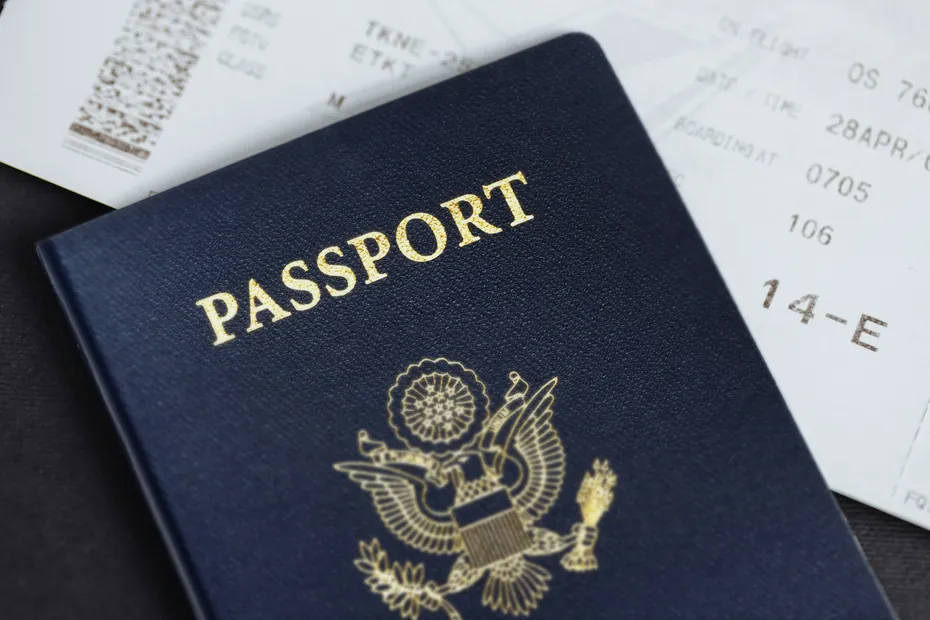

Short answer: not always. U.S. Customs and Border Protection (CBP) allows eligible U.S. citizens on certain closed-loop cruises to return to the United States with other documents. But the cruise line or a country on your itinerary can still require a passport. If you can bring a passport book, it is the most useful backup if a medical or travel emergency means flying home.
A closed-loop cruise can make a passport seem optional, especially on a short Caribbean or Mexico sailing. The federal re-entry exception is real, but it does not settle every boarding or destination rule. Check the itinerary, each traveler's citizenship and age, the cruise line's document policy, and every port before you book.
What counts as a closed-loop cruise?
CBP describes a closed-loop cruise as a voyage that begins and ends at the same U.S. port and travels within the Western Hemisphere. A cruise that starts in one U.S. city and ends in another does not fit that definition. Check your exact itinerary rather than relying on a cruise being labeled “round trip” in an advertisement. CBP's cruise document guidance explains the exception and its limits.
What documents can a U.S. citizen use?
For an eligible closed-loop itinerary, CBP says U.S. citizens can present proof of citizenship such as a passport, an Enhanced Driver's License, or a government-issued birth certificate from the state vital records office where they were born. Travelers age 16 or older also need a government-issued photo ID showing their photo, name, and date of birth. The combination matters: a driver's license by itself is not proof of citizenship for this cruise exception.
CBP lists age-specific alternatives for children under 16, including an original, notarized, or certified copy of a birth certificate, a Consular Report of Birth Abroad, or a Certificate of Naturalization. Because accepted documents can depend on age and itinerary, ask the cruise line exactly what it will accept for each child before sailing.
A passport card can work for U.S. re-entry at sea from places such as Canada, Mexico, Bermuda, and the Caribbean. It is not valid for international air travel. If a traveler has to leave the ship abroad and fly home, a passport book is the more useful document.

Why the cruise line or a destination may still require a passport
The closed-loop rule covers U.S. re-entry; it does not guarantee that every traveler can enter every port without a passport. A destination country may require a passport or visa based on your citizenship, and the cruise line may set stricter boarding requirements. A passenger who cannot meet a destination's entry rules may be denied boarding even when CBP would allow that U.S. citizen to re-enter without a passport book.
The exception is also specific to U.S. citizens and qualifying voyages. Lawful permanent residents and other non-U.S. citizens should check the documents required for their immigration status, re-entry to the United States, and each destination. Do not use a U.S.-citizen checklist for another traveler's situation.
Why a passport book is still the best backup
The U.S. Department of State strongly recommends that cruise passengers carry a passport book, even if the cruise line or CBP does not require one for the planned voyage. A serious illness, a missed departure, or a ship problem could leave you needing to travel home by air. The State Department notes that a passport book is needed for that international flight; a passport card will not substitute for it.
That recommendation is especially practical on a short getaway. An unexpected overnight or flight home can cost more than the time and effort of carrying the book. A passport is not a guarantee against travel disruption, but it gives you more ways to respond if the itinerary changes.
Run this document check before you book
- Confirm the route: Does the cruise start and end at the same U.S. port, and does the itinerary qualify as closed-loop under CBP's definition?
- Check every traveler: Confirm each person's citizenship, age, and required proof of identity and citizenship. Include children and non-U.S. citizens in the check.
- Read the cruise line's current policy: Verify its boarding rules for your specific sailing. Do not assume the federal re-entry exception is the line's full document policy.
- Check each destination: Review entry and visa rules for every port based on each traveler's nationality, even if someone plans to stay aboard.
- Decide whether to bring a passport book: If you have one, carrying it gives you a better option if you need to fly home from abroad.
Verify the rules for your sailing
Start with the official guidance, then confirm the cruise line and destination requirements that apply to your itinerary.
The verdict: passport optional does not mean passport unnecessary
For a U.S. citizen on a qualifying closed-loop cruise, CBP may allow re-entry with proof of citizenship and the required photo ID instead of a passport book. That is a narrow federal exception. Your cruise line and destinations can still require a passport, and a passport book is the document that gives you the most flexibility if you need to fly home.
Before paying for a sailing, match the documents to the exact route and to every traveler. If any part of the plan is uncertain, confirm it with the cruise line and official destination guidance while there is still time to get the right documents.
Sources: U.S. Customs and Border Protection cruise document guidance and the U.S. Department of State cruise travel guidance, checked October 7, 2026.
Images are AI-generated illustrations; they do not depict a specific cruise line, ship, or port.