
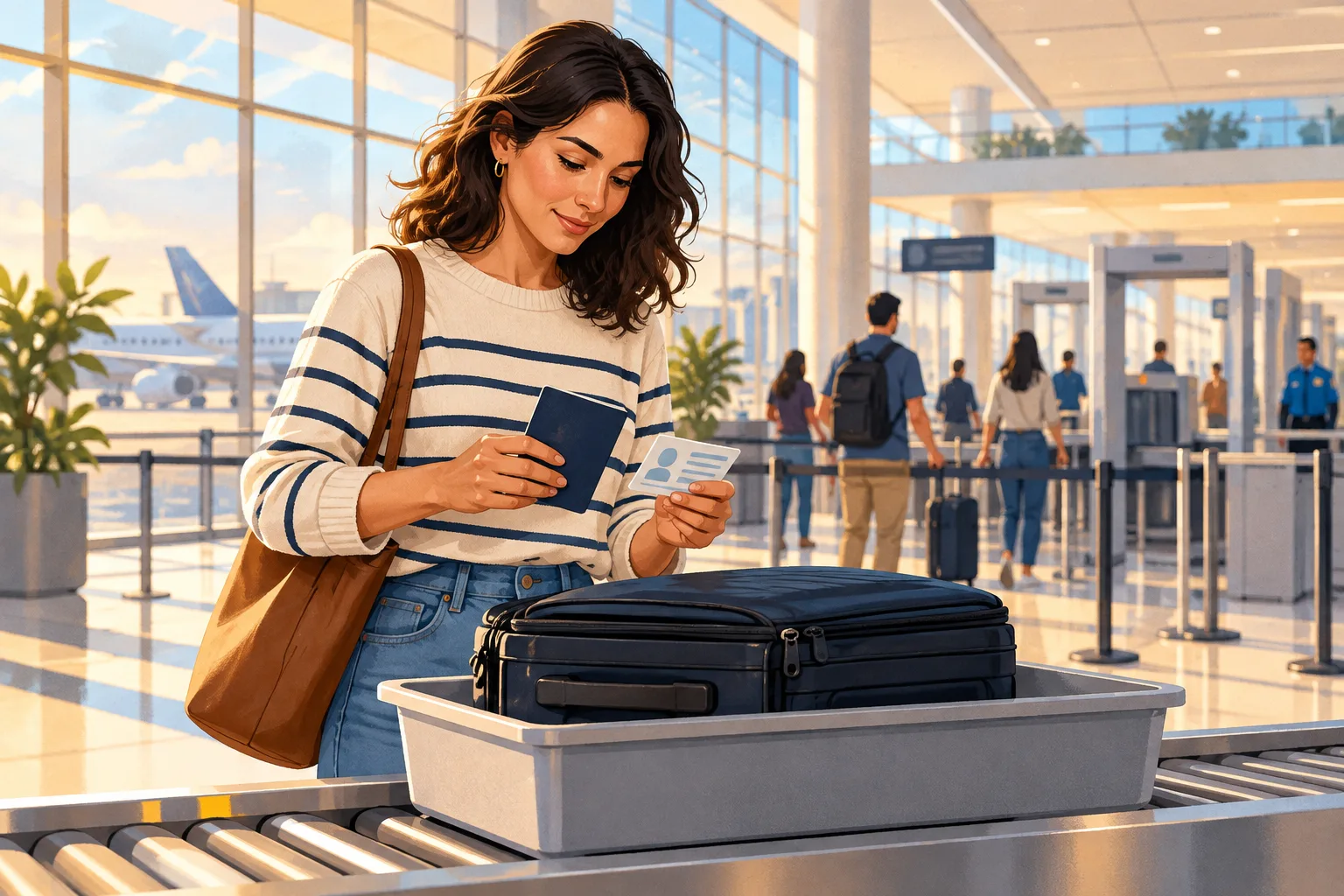
If your driver’s license is REAL ID compliant, the domestic-flight ID question is easy: bring it to the TSA checkpoint. If your license is a standard state credential without REAL ID compliance, do not count on it by itself. Since May 7, 2025, TSA has required adults 18 and older to present a REAL ID-compliant state ID or another form on its accepted list.
That does not mean every traveler needs a passport. A passport book or passport card works, but so do several other credentials. The useful move is to check the document you already have, match it against TSA’s current list, and pack that exact document somewhere you can reach before you join the security line.
The short answer: bring one accepted ID
For most adult domestic travelers, the simplest options are a REAL ID-compliant driver’s license or state identification card, a state-issued Enhanced Driver’s License or Enhanced Identification Card, a U.S. passport, or a U.S. passport card.
TSA’s list also includes DHS trusted traveler cards such as Global Entry, NEXUS, SENTRI, and FAST; U.S. Department of Defense IDs, including dependent IDs; permanent resident cards; acceptable photo IDs issued by federally recognized Tribal Nations or Tribes; foreign government-issued passports; Transportation Worker Identification Credentials; and several other federal credentials.
The list can change, and a card that looks official is not automatically accepted. Use TSA’s live acceptable identification list for the final check rather than a saved social graphic or an old packing list.
A quick document check
- Using a state license or ID? Confirm with your state motor vehicle agency that it is REAL ID compliant, or that it is an accepted Enhanced Driver’s License or Enhanced ID.
- Using another credential? Find its exact name on TSA’s current accepted-ID list.
- Carrying an expired document? Recheck TSA’s expiration rule before the trip.
- Renewing a license? Do not rely on the temporary paper license as your checkpoint ID.
How to tell whether your license is ready
REAL ID-compliant licenses usually carry a star or another state-specific mark, but the design is not identical everywhere. If the symbol is unfamiliar or the card predates your state’s REAL ID rollout, check with the agency that issued it. TSA specifically directs travelers who are unsure to their state department of motor vehicles or equivalent office.
A state-issued Enhanced Driver’s License or Enhanced Identification Card is also accepted. That is a different credential from a standard state license, and only certain states issue enhanced cards. Do not assume the word “enhanced” applies because a license has upgraded security features. Confirm what the issuing state calls the card.
A temporary driver’s license is not an acceptable TSA credential. This catches travelers who renew close to departure and expect the paper temporary document to bridge the gap. If the permanent card will not arrive in time, plan to carry another accepted ID.
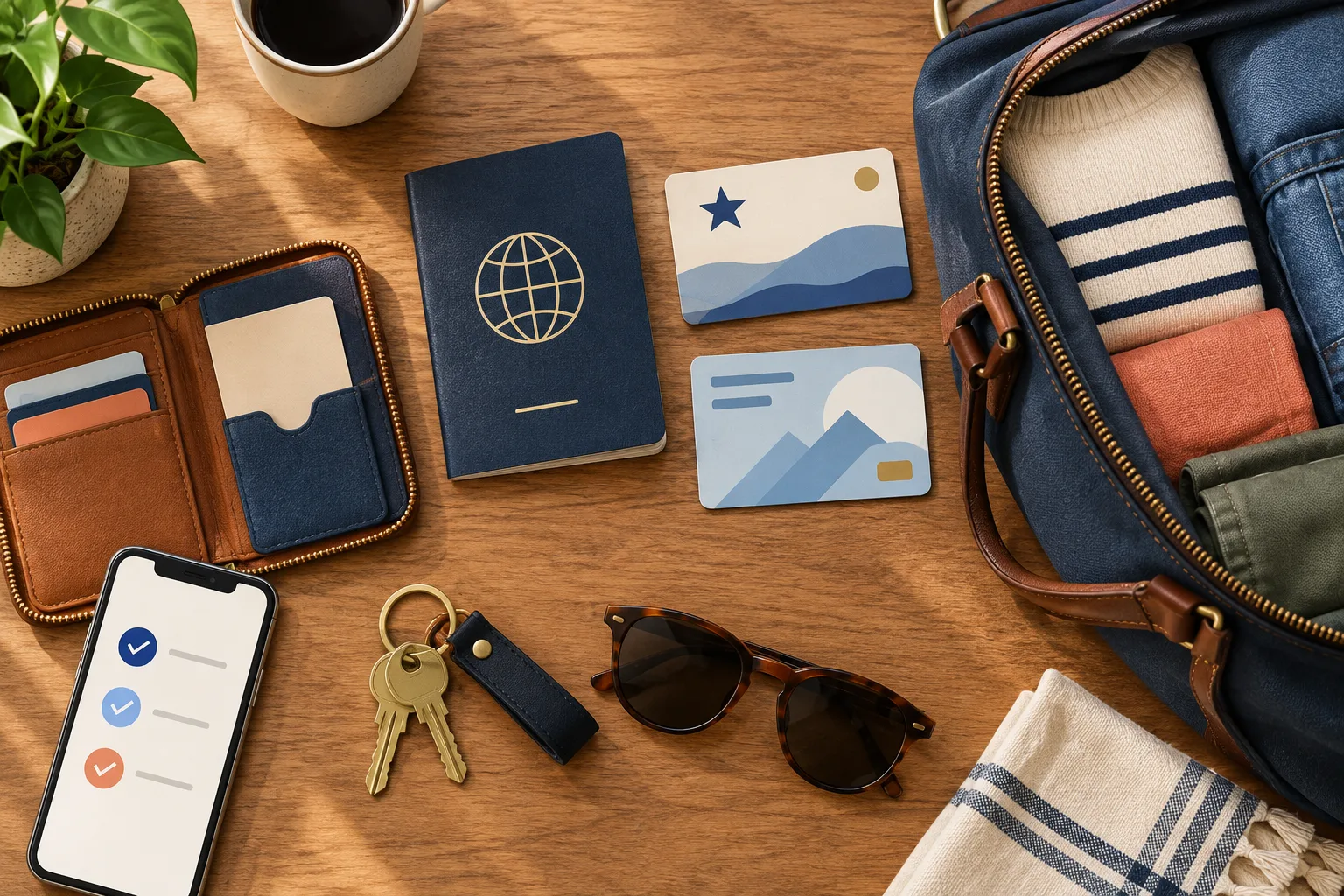
A passport is useful, but it is not the only backup
A valid U.S. passport book is an easy alternative when a state license is not REAL ID compliant. A U.S. passport card also appears on TSA’s accepted list and is easier to fit in a wallet. For a domestic flight, either can solve the checkpoint problem.
That does not turn a passport card into an all-purpose substitute for a passport book. The State Department explains that the card cannot be used for international air travel. If the same trip includes an international flight, check the destination’s entry rules and carry the correct passport document for that journey.
Trusted traveler cards can also be convenient, but membership by itself is not the same as carrying the physical credential. If you plan to use a Global Entry, NEXUS, SENTRI, or FAST card as your checkpoint ID, put the accepted card in your wallet before leaving home.
Can you use a digital ID on your phone?
Sometimes, but it is not a universal replacement for a physical card. TSA accepts certain mobile driver’s licenses issued by approved states, and the underlying credential must be based on a REAL ID, Enhanced Driver’s License, or Enhanced Identification Card. Participation also depends on the state and checkpoint.
Check TSA’s current participating states and eligible digital IDs before deciding to leave the physical credential at home. For a short trip, the least stressful plan is still to carry the physical accepted ID when you have it.
What if your acceptable ID is lost or left at home?
Do not treat the airport as the place to discover your backup plan. Starting February 1, 2026, TSA says adults who cannot provide an acceptable ID can choose to pay a $45 fee to use TSA ConfirmID. TSA then attempts to verify the traveler’s identity before security screening.
ConfirmID is optional, and payment does not guarantee that TSA will be able to verify you. TSA says the fee must be paid through Pay.gov, the payment is valid for 10 days from the travel start date entered, and each adult without acceptable ID must complete the process separately. The traveler should keep the Pay.gov confirmation email and show a printed or electronic receipt at the checkpoint.
This is an emergency route, not an equal substitute for bringing an accepted credential. It adds cost, time, and uncertainty, and a traveler whose identity cannot be verified will not be allowed through the checkpoint. If you genuinely have no accepted ID, read the live TSA ConfirmID instructions and complete the official process before heading to the airport.
Expired ID, names, and children need separate attention
TSA currently says it accepts the listed forms of identification for up to two years after expiration. That is useful if a passport or qualifying license recently expired, but it is also a rule worth checking again just before travel. A document beyond that window should not be your plan.
Your boarding pass and ID should use the same core name. TSA says a suffix such as “Jr.” does not have to appear on both, and a suffix appearing on only one is an acceptable variation. For a larger mismatch, contact the airline before travel so the reservation can be reviewed or corrected.
TSA does not generally require children under 18 to show identification for domestic travel. Airlines may have their own rules, especially for unaccompanied minors, so check with the carrier. TSA also says an unaccompanied minor who is eligible for TSA PreCheck must show an acceptable ID to receive expedited screening.
Pack the document before the rest of the trip
The night before departure, open TSA’s current list one last time and verify the exact credential you intend to use. Put it in the same reachable pocket as your phone and boarding pass, not deep in a checked bag or in a wallet you plan to leave in the car.
If your license is not REAL ID compliant, choose the accepted alternative now. A passport book, passport card, enhanced state ID, trusted traveler card, or another qualifying credential may already solve the problem. The key is to confirm the document itself, not to assume that anything government-issued will work.
The bottom line
An adult flying within the United States needs a REAL ID-compliant state credential or another ID on TSA’s accepted list. A noncompliant standard license is not enough by itself. A passport is a common backup, not the only one.
Confirm what you have, bring the physical accepted document when possible, and treat TSA ConfirmID as a costly last resort rather than a travel strategy. That five-minute check at home protects the part of a weekend getaway you cannot replace: the departure.
Sources: TSA acceptable identification guidance, TSA REAL ID guidance, TSA ConfirmID, TSA digital ID participation, and U.S. State Department passport card guidance. Identification rules and participating digital-ID programs can change, so verify them again before travel.
Images are AI-generated editorial illustrations. They do not reproduce a real driver’s license, passport, trusted traveler card, boarding pass, government credential, airport, or traveler.